Terme Elbasan Llixha
- Location
- Elbasan, Albania
- Water type
- bicarbonate
- Temperature
- 32 °C
- pH
- 7.3
Water profile
Stimulating — wakes the body and boosts circulation.
Loaded with major ions — the essential minerals (Ca, Mg).
Soft water — natural, classic buoyancy.
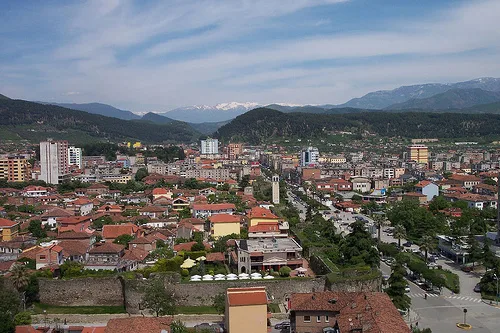
Terme Elbasan Llixha draws bicarbonated mineral springs at Llixha, a village in the Shkumbin river valley below Elbasan, central Albania's largest industrial city, whose steel works constructed by Chinese engineers between 1974 and 1978 as part of the Sino-Albanian alliance of the Maoist period became one of the most extreme symbols of Enver Hoxha's isolationist industrialisation programme, its blast furnaces lit with Chinese expertise at the precise moment the same government was demolishing every mosque, church, and place of worship in the country in what it declared the world's first officially atheist state. The Llixha hot springs, their steaming bicarbonated water emerging from the limestone of the Elbasan basin into simple outdoor pools used freely by local communities, represent the older pre-industrial Albania that survived beneath the communist industrial overlay, a landscape of fig trees, mulberry orchards, and shepherd trails that the steel age could not entirely replace. The springs of Llixha, valued for relaxation and skin comfort in a Shkumbin valley whose geological structure produces geothermal water at multiple points along the fault zone, offer an encounter with an Albanian thermal tradition that predates the communist period by many centuries and continues quietly in the shadow of a rusting industrial monument to the twentieth century's most extreme ideological experiments.