Haapsalu Kuursaal
- Location
- Haapsalu, Estonia
- Water type
- sodium chloride, bicarbonate
- Temperature
- 33 °C
- pH
- 7.9
Water profile
Stimulating — wakes the body and boosts circulation.
Loaded with major ions — the essential minerals (Ca, Mg).
Dense, salty water — you float without effort.
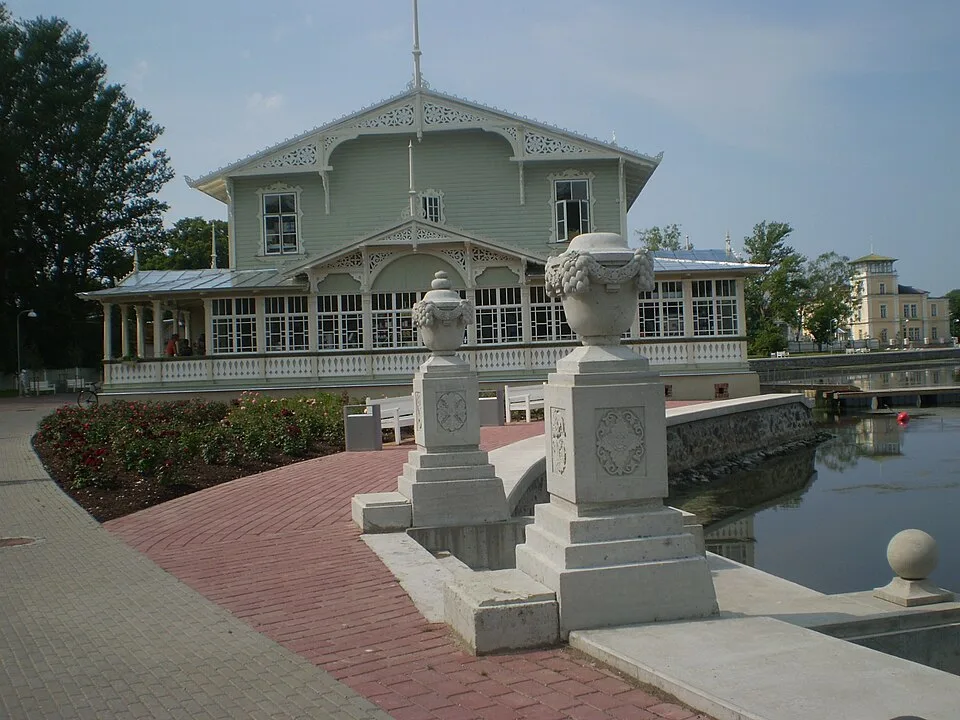
Haapsalu Kuursaal is a historic spa pavilion and promenade on the shores of the Haapsalu Bay in western Estonia, where the mud of the shallow coastal lagoon, a marine clay rich in diatoms and salt, has been part of the local bathing tradition since the first bathing facilities were established in 1825, making Haapsalu the oldest mud spa resort in the Baltic states. Tchaikovsky came to Haapsalu in 1867 to visit his friends the Brothers Davydov and spent several weeks composing Souvenir de Hapsal, a piano suite whose three movements were inspired by the evening light on the bay, the sounds of the sea, and a young woman's face glimpsed in the ruins of the town's medieval Bishop's Castle, and the Tchaikovsky Musical Kiosk on the promenade, depicted on Estonian banknotes, commemorates his visit in a town whose musical associations carry a quiet pride disproportionate to its modest size. The chlorurated coastal mud of Haapsalu, harvested from the protected lagoon and applied in classic peloid wraps and baths, has long been part of the local wellness tradition in a setting where the medieval castle, the wooden villas of the Kesklinn district, and the reflections of Estonian sunsets on the shallow bay create one of the most atmospherically complete small-town spa environments in the Baltic region.