Tbilisi Sulfur Baths
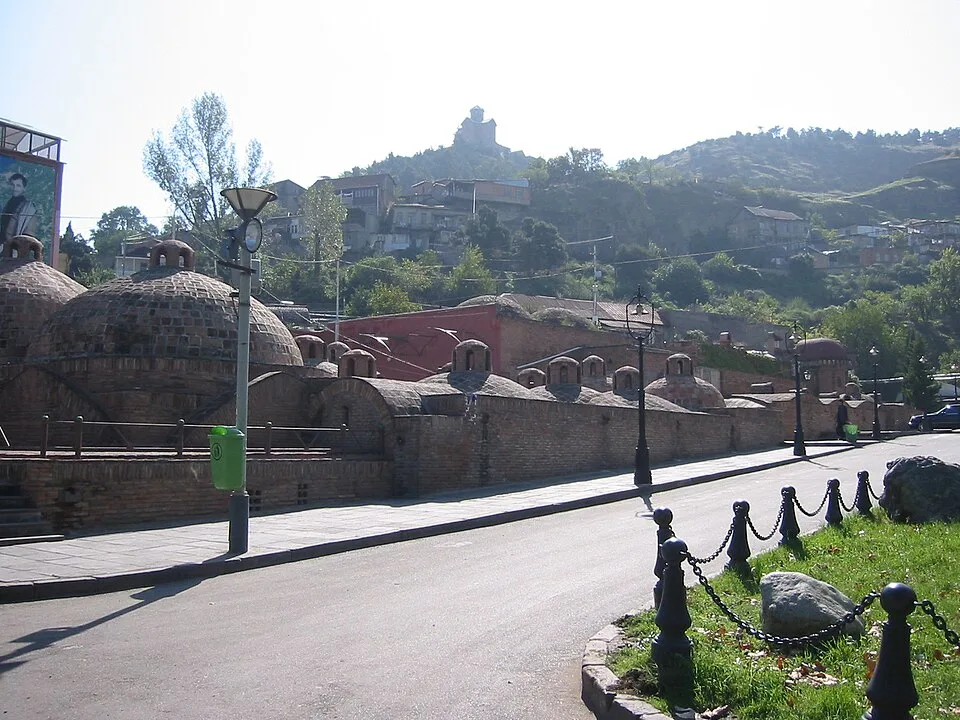
- Location
- Abanotubani, Tbilisi, Georgia
- Water type
- sulfurous
- Temperature
- 37 °C
- pH
- 7
Water profile
Soothing — neither hot nor cold, perfect balance.
Rich in active gases or metals — a strong mineral character.
Soft water — natural, classic buoyancy.
The Tbilisi Sulfur Baths in the Abanotubani district of the Georgian capital are among the oldest and most culturally embedded urban thermal bathing traditions in the world, where sulfurous hydrogen sulfide springs at thirty-seven degrees Celsius have fed brick-domed bathhouses for at least fifteen centuries in the quarter that legend says prompted the very founding of Tbilisi itself — King Vakhtang Gorgasali reportedly named the city after discovering these hot springs, the Georgian word tbili meaning warm. The domed bathhouse complex ranges from atmospheric communal public facilities to luxurious private rooms available for two-hour sessions, where expert Georgian masseurs perform the vigorous kisi body scrub treatment using traditional mittens and fragrant soap in a ritual that leaves skin brilliantly renewed and muscles deeply restored in the manner of Caucasian bathing culture at its most refined. Tbilisi's Abanotubani is not merely a spa district but a living piece of the city's founding mythology, inseparable from Georgian cultural identity in a way that makes bathing here an act of participation in one of Caucasian civilisation's most ancient and enduring traditions.