Tbilisi Sulfur Baths Abanotubani
- Location
- Tbilisi, Abanotubani, Georgia, Georgia
- Water type
- sulfurous
- Temperature
- 39 °C
- pH
- 6.5
Water profile
Relaxing — deep, immediate muscle release.
Rich in active gases or metals — a strong mineral character.
Soft water — natural, classic buoyancy.
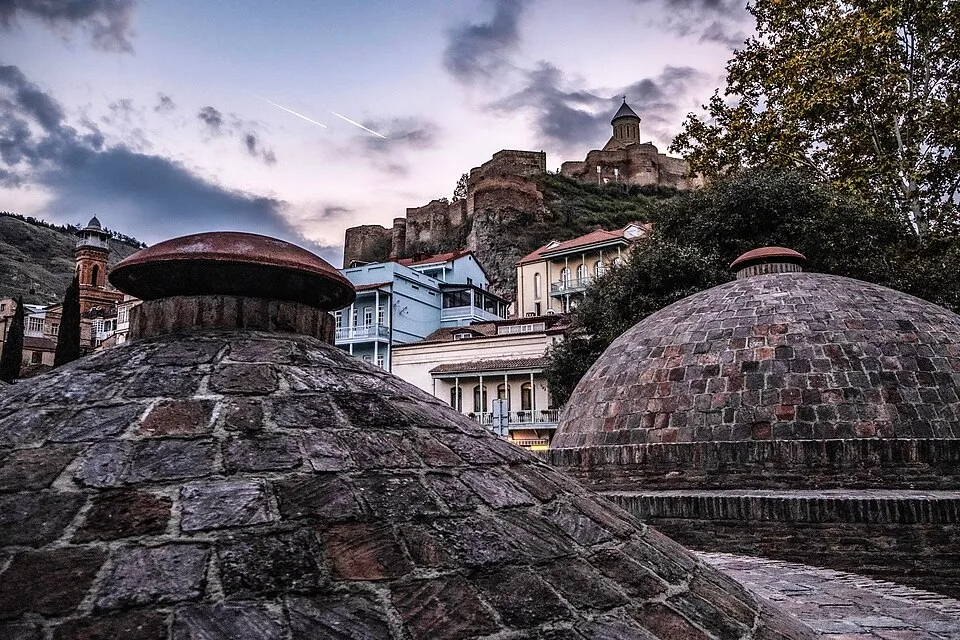
The Tbilisi Sulfur Baths of the Abanotubani district are among the most historic and architecturally distinctive spa complexes in the entire Caucasus, their characteristic domed brick bathhouses clustered along the banks of the Mtkvari river in the ancient quarter that gave Tbilisi its very name — the Georgian word for warm place, referencing the sulfurous springs that have defined this site since at least the 5th century AD. Natural sulfurous hot springs emerge at approximately 37°C from deep geological fissures beneath the old city, and have fueled a sophisticated Persian-style hammam bathing culture here for over fifteen centuries, with chronicles recording the springs' use by Georgian kings and later by Persian shahs and Russian tsars. The mineral-laden sulfurous water is channeled into private and communal bathing rooms where kisi — traditional exfoliation with a coarse mitt — and herbal scrubs are performed by experienced bath masters in an unbroken tradition of Caucasian therapeutic bathing. Surrounded by medieval churches, a Silk Road caravanserai, the Narikala fortress, and the Old Town's colorful balconied houses, a soak in Abanotubani's sulfur baths is an immersion in fifteen centuries of Caucasian urban thermal life.