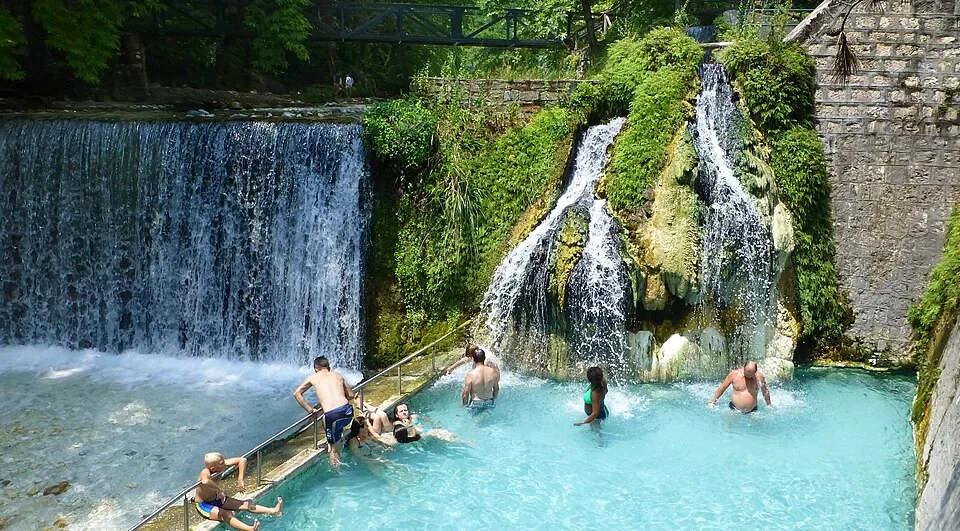
Rich in active gases or metals — a strong mineral character.
Buoyancy
Standard buoyancy
LowHigh
Soft water — natural, classic buoyancy.
SoufreSulfuresSulfates
The Roman Thermae of Kyllini are the well-preserved remains of a Roman-era thermal bathing complex at Kyllini (ancient Cyllene) on the western coast of the Peloponnese, where naturally sulphurous hot springs provided the water supply for one of Greece's most significant ancient thermal establishments. The Romans, who systematically exploited Greece's geothermal resources during the imperial period, built sophisticated bathing infrastructure at Kyllini that served both local residents and travellers arriving or departing from the strategically important port. The archaeological remains offer a compelling window into the Roman world's mastery of thermal engineering and the central role of mineral water bathing in ancient Greek and Roman wellness culture.
Insider tip — The Roman thermae of Kyllini on the northwestern Peloponnese coast stand as archaeological testimony to the ancient valorization of this sulfurous spring site, where warm mineral water was channeled into stone bathing chambers during the Roman Imperial period. Kyllini served as the main port of the Elis region in antiquity, and the thermal baths were among the amenities offered to travelers and the local elite. The sulfurous spring here flows at around 38°C from Cretaceous limestone formations along the Ionian coastal plain. The ruins can be visited in conjunction with the nearby Chlemoutsi Crusader castle, creating a layered journey through two millennia of history.