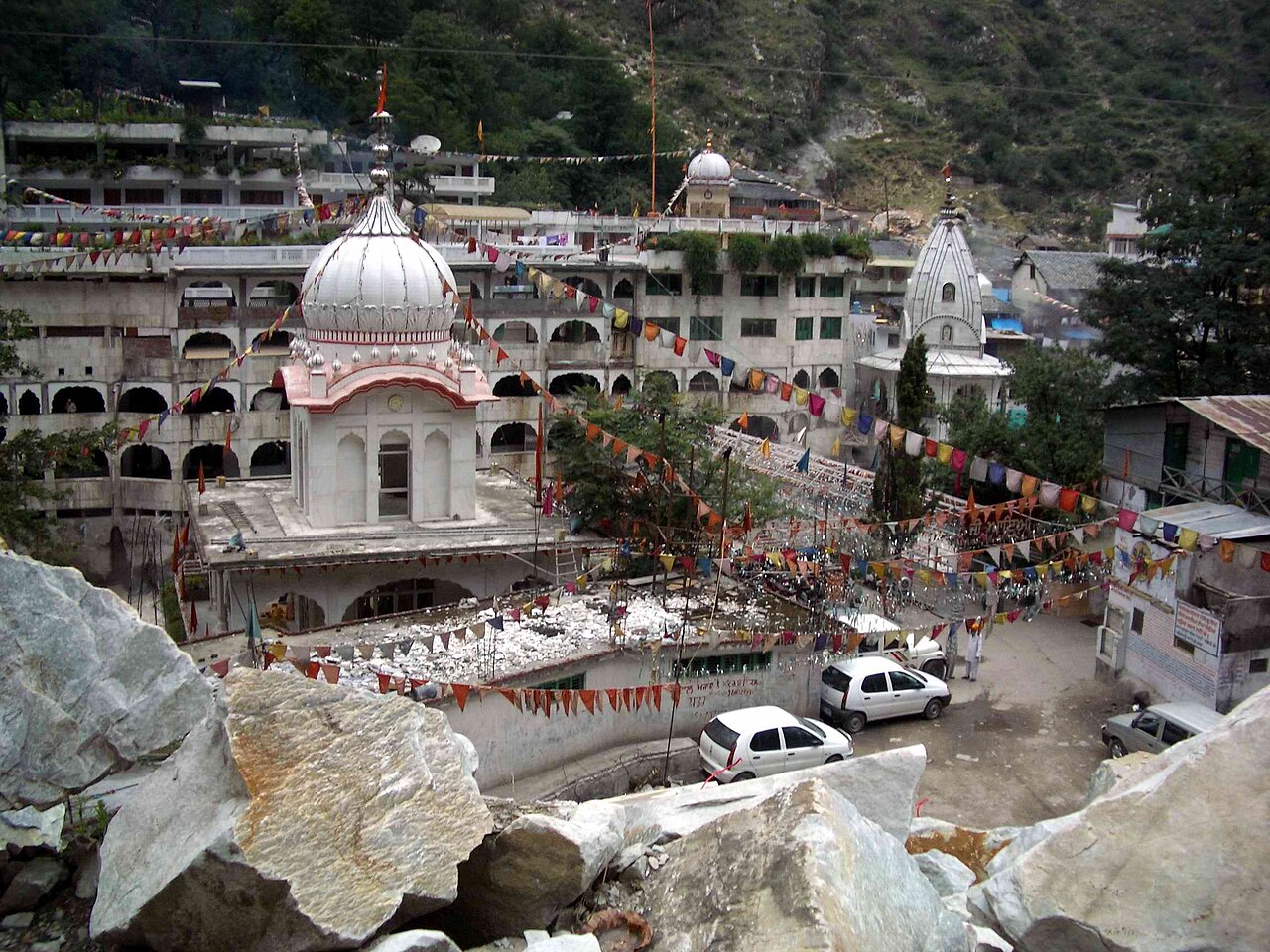
Manikaran Gurudwara Hot Spring
- Location
- Manikaran, Himachal Pradesh, India
- Water type
- sulfurous
- Temperature
- 42 °C
- pH
- 6.5
Water profile
Relaxing — deep, immediate muscle release.
Rich in active gases or metals — a strong mineral character.
Soft water — natural, classic buoyancy.
In the Parvati Valley of Himachal Pradesh, the pilgrimage site of Manikaran sits at an elevation of roughly 1,760 metres, cradled between snow-dusted Himalayan peaks and the rushing Parvati River. Here, a sulfurous hot spring surfaces beside a Sikh gurudwara and a Hindu temple, making this one of the rare places where geothermal activity and living religious tradition intersect so visibly.
The water emerges at 42 °C with a mildly acidic pH of 6.5, carrying the characteristic sharp, mineral bite of a sulfurous source. At the gurudwara, the spring has historically been used to cook the langar — the communal meal offered free to all visitors — a practice that transforms raw geothermal energy into an act of shared hospitality. Pilgrims and trekkers alike stop here to dip in the bathing sections, drawn by the spectacle of steam rising against mountain cold and by the centuries-old convergence of faith and geology.