Terme di Stabiane
- Location
- Campania, Italy
- Water type
- sulfurous
- Temperature
- 40 °C
- pH
- 7.3
Water profile
Relaxing — deep, immediate muscle release.
Rich in active gases or metals — a strong mineral character.
Soft water — natural, classic buoyancy.
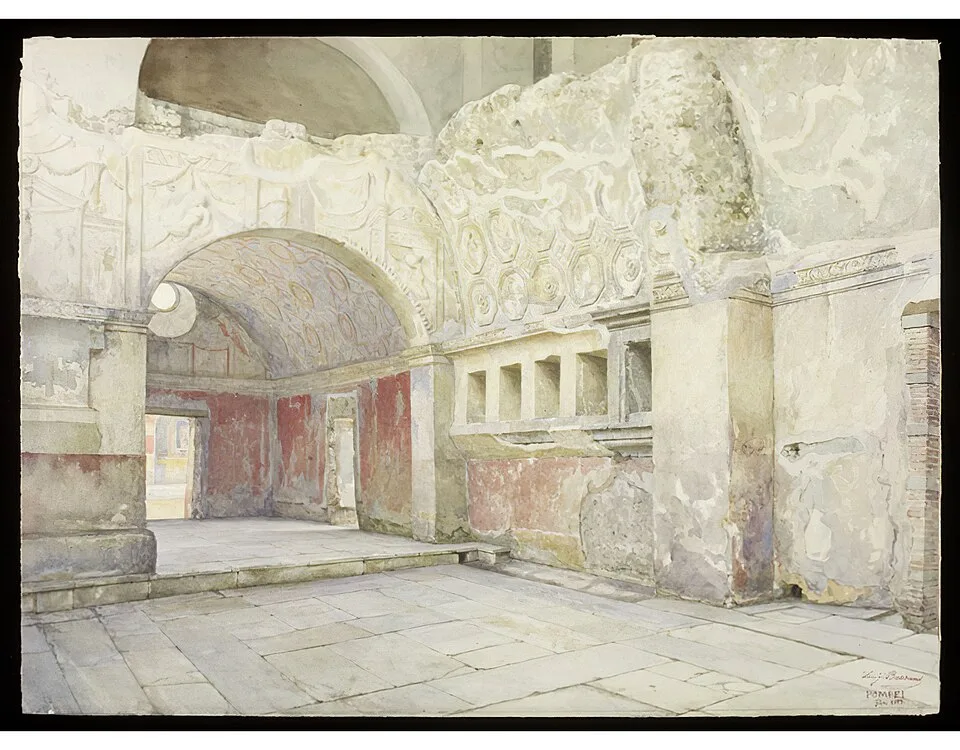
The Terme Stabiane in Pompeii are one of the most important surviving examples of Roman public bathing architecture in the world, a monumental bath complex constructed in the 2nd century BC that offers an unparalleled window into the social and hygienic life of ancient Rome. Buried by the eruption of Vesuvius in 79 AD and subsequently excavated, the baths preserve a remarkable sequence of changing rooms, frigidaria, tepidaria, and caldaria with their original stucco decorations, mosaic floors, and heating infrastructure largely intact. At the time of eruption, the Terme Stabiane were the largest and most sophisticated baths in Pompeii and served as the social hub of the city, where all classes of Roman society gathered for bathing, conversation, and civic life. A visit to the Terme Stabiane is an extraordinary archaeological experience, offering direct contact with the ancient world's most highly developed thermal bathing culture.