Terme di Cottorella
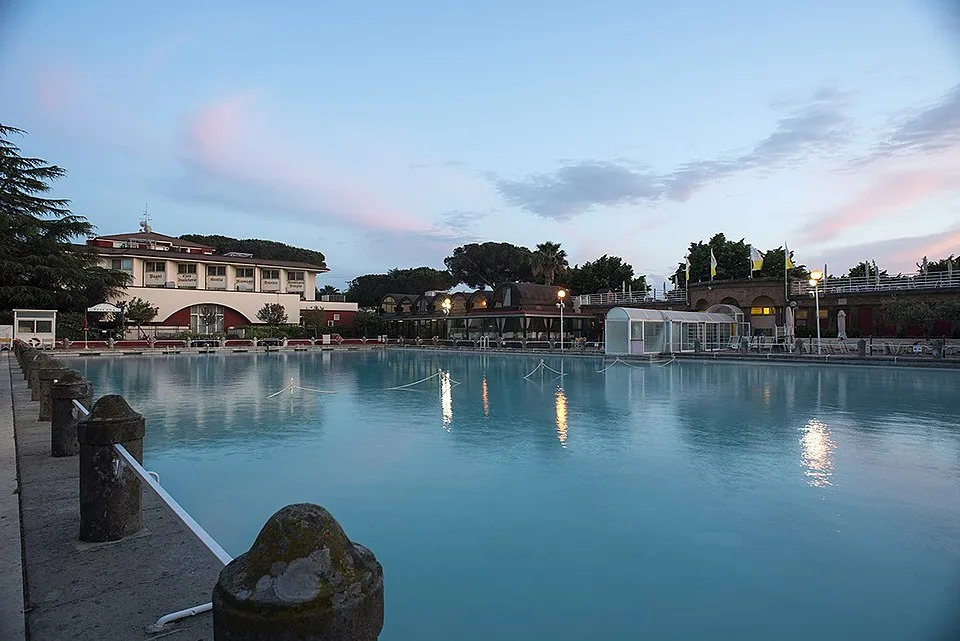
- Location
- Narni, Terni Province, Italy
- Water type
- sulfurous
- Temperature
- 35 °C
- pH
- 6.5
Water profile
Soothing — neither hot nor cold, perfect balance.
Rich in active gases or metals — a strong mineral character.
Soft water — natural, classic buoyancy.
At the foot of Monte Belvedere, around 400 metres above sea level and about one kilometre from Rieti, the Cottorella spring has been known since Roman times, when Emperors Vespasian and Titus — both born in Rieti — used to visit these waters in the heart of Sabina. In the Middle Ages, Pope Gregory IX, along with nobles and high prelates, continued the tradition, and Rome's Fatebenefratelli hospital requested daily deliveries of the water.
Authorised for bottling in 1926 by the Ministry of the Interior under the name "Fonte Cottorella, digestive water," the site resumed full activity in 1968 after a dormant period, before a new facility was completed in 1986. The spring's name is said to come from an old popular belief that this water was especially suited to cooking vegetables.