Tsukuba Koseidai Onsen
- Location
- Tsukuba, Ibaraki, Kanto, Japan
- Water type
- sodium chloride
- Temperature
- 41 °C
- pH
- 7.3
Water profile
Relaxing — deep, immediate muscle release.
Loaded with major ions — the essential minerals (Ca, Mg).
Dense, salty water — you float without effort.
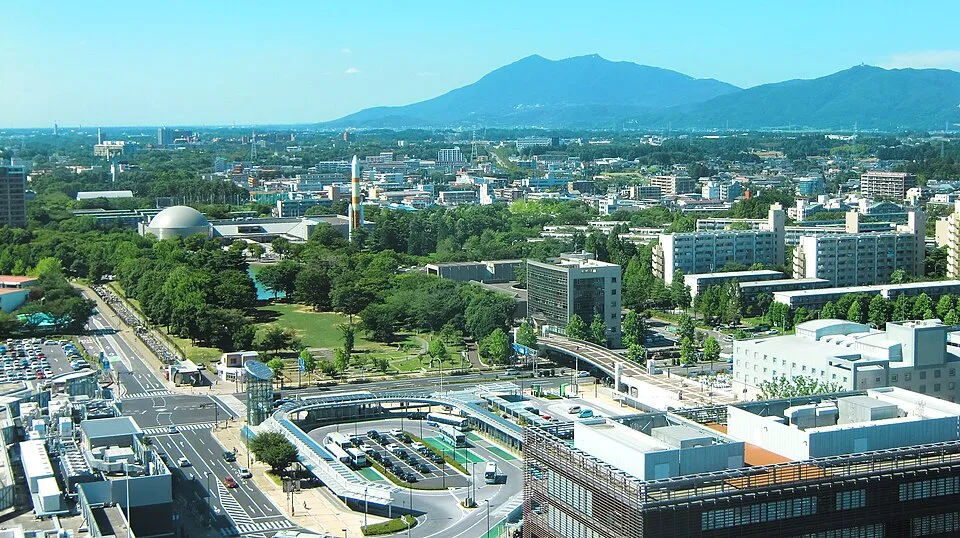
Tsukuba Koseidai Onsen serves Japan's purpose-built science city of Tsukuba, whose research institutes and university facilities house more Nobel laureates per square kilometer than almost any city on Earth, clustered around the JAXA Tsukuba Space Center — mission control for Japan's contribution to the International Space Station and site of the country's astronaut training program. The city rises at the foot of Mount Tsukuba, the isolated twin-peaked volcano celebrated since the Man'yoshu poetry anthology of the 8th century as a symbol of love and seasonal beauty, its distinctive silhouette visible from the Kanto Plain for dozens of kilometers. The onsen's silica-rich mineral waters invite researchers and visitors alike to step out of the laboratory and into the ancient Japanese tradition of restorative thermal bathing beneath the shadow of a mountain that has been revered for over a thousand years.