Tbilisi Sulphur Baths (Abanotubani)
- Location
- Tbilisi, Abanotubani District, Georgia, Georgia
- Water type
- sulfurous
- Temperature
- 40 °C
- pH
- 6.5
Water profile
Relaxing — deep, immediate muscle release.
Rich in active gases or metals — a strong mineral character.
Soft water — natural, classic buoyancy.
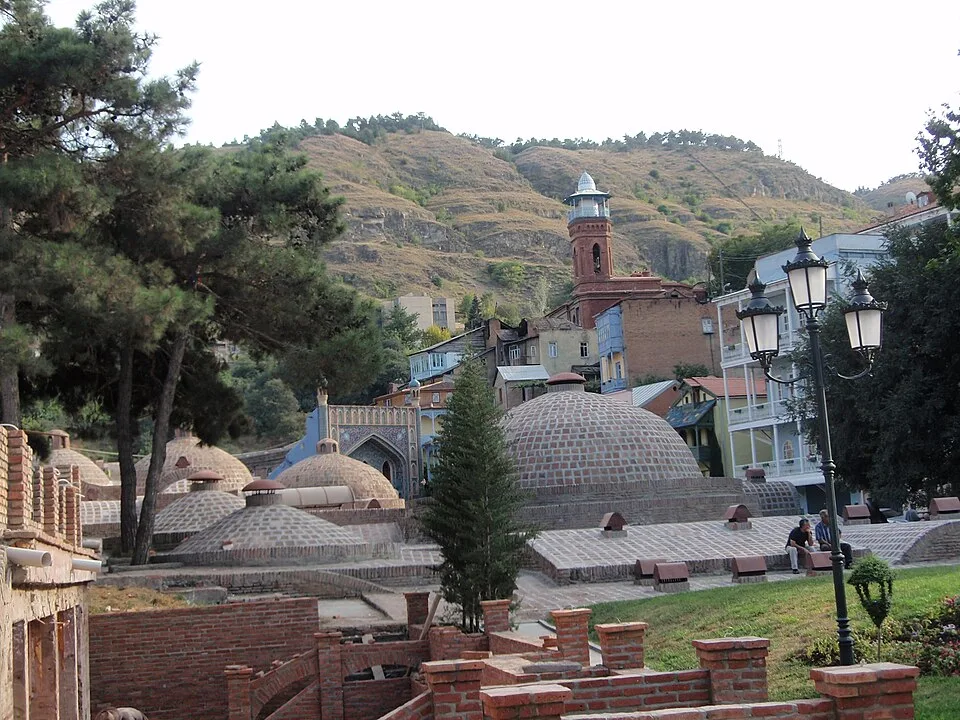
The Tbilisi Sulphur Baths of the Abanotubani district, the oldest continuously operating thermal quarter in the South Caucasus, draw naturally sulphurous geothermal water at 37 to 42 degrees Celsius from the deep fault system of the Mtkvari river valley, their distinctive dome-roofed structures of brick and tuff visible above street level in a warren of bathhouse alleys beneath the Narikala fortress that has defined the thermal character of old Tbilisi since at least the fifth century. The kesseur tradition of the Georgian bath attendant, a masseur-scrubber who performs a vigorous exfoliation ritual with a coarse mitt followed by soap lathering, deep tissue manipulation, and bucket rinses of alternating hot and cold mineral water in the private bath cabinets, is a service inherited from the Ottoman hammam tradition and adapted to the Georgian cultural context of the Caucasian crossroads where Persian, Turkish, and Georgian bathing customs merged over centuries of trade and conquest. Alexander Pushkin, Alexandre Dumas, and Alexandre de Humboldt all visited the Abanotubani baths during their Caucasian travels and left accounts of the experience, and the quarter's role as a salon of cross-cultural encounter for diplomats, merchants, poets, and philosophers passing through Tbilisi on the Silk Road continues in subtler form today in the private bath cabinets where Georgian business culture is still conducted over shared steam.