Terme di Pozzuoli
- Location
- Pozzuoli, Campania, Italy
- Water type
- bicarbonate
- Temperature
- 40 °C
- pH
- 8
Water profile
Relaxing — deep, immediate muscle release.
Loaded with major ions — the essential minerals (Ca, Mg).
Soft water — natural, classic buoyancy.
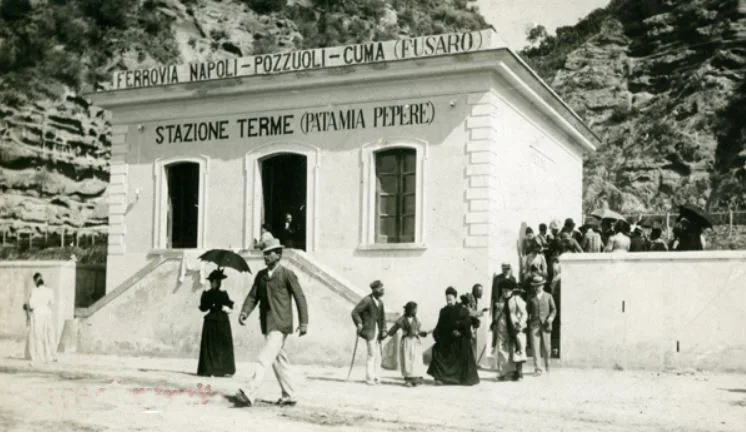
Terme di Pozzuoli occupies the heart of the Campi Flegrei — the Phlegraean Fields — a vast supervolcanic caldera west of Naples that ranks among the most geologically unstable landscapes in Europe, where the ground itself rises and falls in a phenomenon called bradyseism that has shifted the ancient Roman harbor at Pozzuoli by several meters within recorded history. The nearby Solfatara crater vents fumaroles and bubbling sulfurous mud pools that make the landscape resemble an active volcanic surface, while the Flavian Amphitheater of Pozzuoli — the third-largest in the Roman Empire and remarkably well preserved — rises from a city that was one of ancient Rome's most important commercial ports. Bathing in Pozzuoli's volcanic thermal waters means soaking in the direct output of a supervolcanic system that has shaped human habitation here for more than 2,500 years and continues to reshape the very ground beneath the city.