Sorgenti dell’Asinello
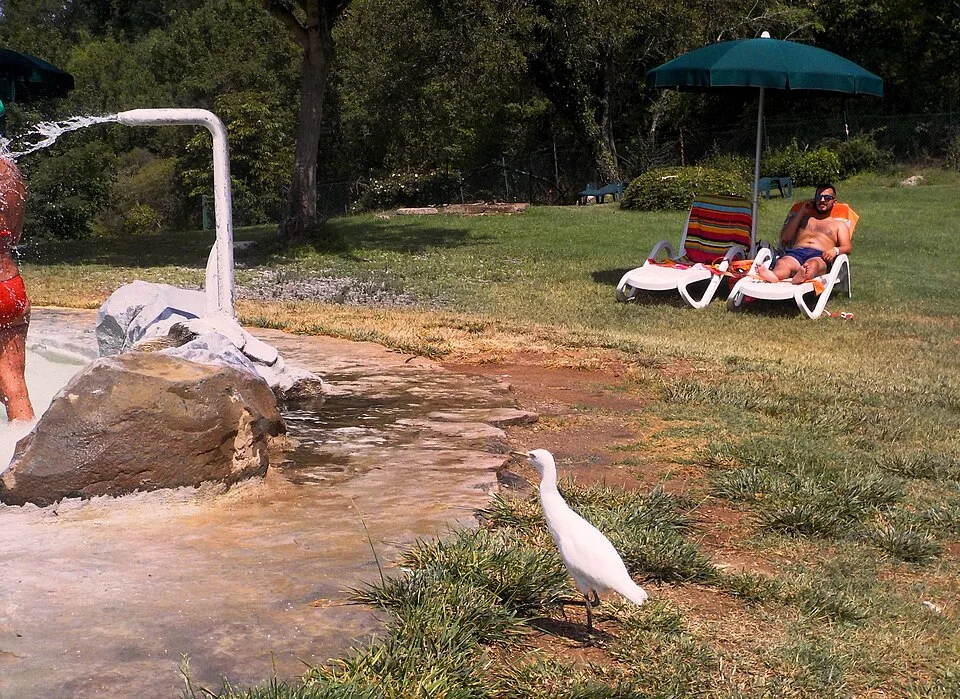
- Location
- Viterbo, Lazio, Italy
- Water type
- sulfurous
- Temperature
- 38 °C
- pH
- 6.5
Water profile
Soothing — neither hot nor cold, perfect balance.
Rich in active gases or metals — a strong mineral character.
Soft water — natural, classic buoyancy.
Sorgenti dell'Asinello — 'Springs of the Little Donkey' — are natural sulphurous thermal springs in Italy, likely in the volcanic or Apennine thermal zone, whose evocative name reflects the traditional Italian practice of naming springs after local animal associations or folk memories of the landscape. These natural springs, accessible in the Italian countryside, embody the terme libere (free thermal waters) tradition where natural sulphurous or mineral water flows freely and is available for bathing without charge, a democratic thermal heritage that survives particularly in Tuscany, Lazio, and the Apennine foothills. The surrounding Italian rural landscape, with its olive groves, vineyard terraces, and medieval village silhouettes, provides the characteristically timeless Italian countryside setting.