Kanniya Hot Spring Trincomalee
- Location
- Trincomalee, Eastern Province, Sri Lanka
- Water type
- bicarbonate, sodium chloride
- Temperature
- 38 °C
- pH
- 8
Water profile
Soothing — neither hot nor cold, perfect balance.
Loaded with major ions — the essential minerals (Ca, Mg).
Dense, salty water — you float without effort.
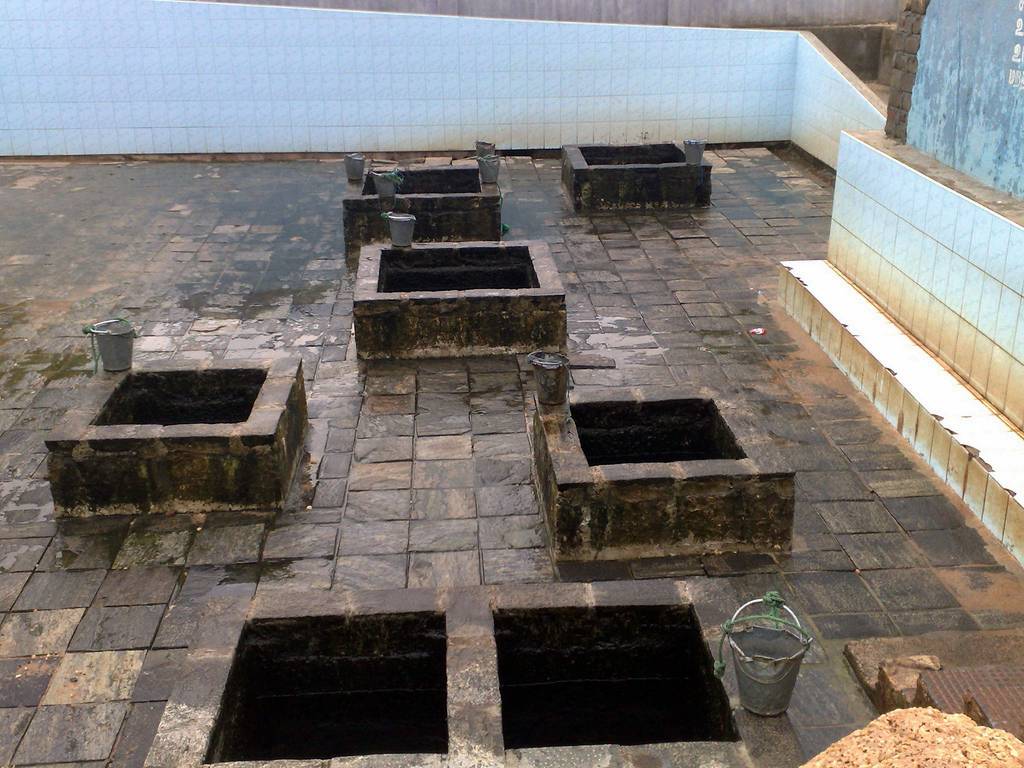
Kanniya Hot Spring lies just north of Trincomalee in Sri Lanka's Eastern Province, a region whose landscape — flat coastal plains, ancient temple sites and the immense natural harbour of Trincomalee Bay — reflects the island's layered historical depth. The springs themselves are an anomaly: a cluster of natural wells of differing temperatures arranged close together within a setting of Hindu pilgrimage significance, associated in local tradition with the sage Agastya and the site of an ancient temple.
The water is classified as bicarbonate and sodium-chloride, emerging at 38 °C — pleasantly warm — with an alkaline pH of 8.0. The combination of mineral types lends the water a soft, mildly salty character. What makes Kanniya distinctive is not its thermal intensity but its cultural layering: the site draws Tamil Hindu pilgrims performing ritual bathing as much as travellers simply curious about the geological anomaly. Visiting here means participating in a living tradition of sacred spring culture that has persisted through Sri Lanka's long and turbulent history along the Trincomalee coast.