Vashisht Hot Spring Manali
- Location
- Vashisht, Manali, Himachal Pradesh, India
- Water type
- sulfurous
- Temperature
- 42 °C
- pH
- 6.5
Water profile
Relaxing — deep, immediate muscle release.
Rich in active gases or metals — a strong mineral character.
Soft water — natural, classic buoyancy.
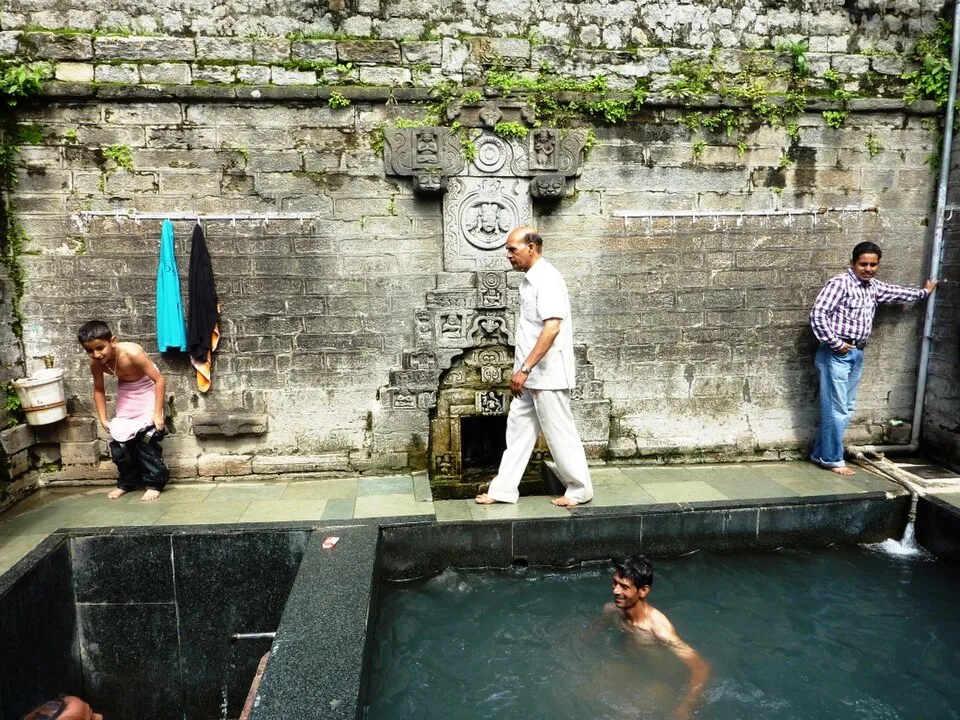
Vashisht Hot Spring, in the village of Vashisht just 3 kilometres from Manali in the Kullu district of Himachal Pradesh, draws on sulfurous thermal waters sacred to the Hindu sage Vashisht — the Maharishi who served as the family priest of the solar dynasty kings, including Rama of the Ramayana epic — and whose name the village and its ancient temple both bear, creating one of the Himalayas' most spiritually significant thermal bathing sites. The naturally hot sulfurous waters, emerging from the geothermal activity of the young Himalayan fold mountains, feed both the ancient stone-built village hot spring tanks (separate baths for men and women) and modern hotel spa facilities in a village that preserves traditional Himachali wooden temple architecture alongside the adventure tourism infrastructure of the Manali ski and trekking hub. The setting of Vashisht, with the Beas river valley below, the Rohtang Pass snow-fields above, and the apple orchards and cedar forests of the Kullu valley all around, places this sacred thermal site within one of the western Himalaya's most scenically magnificent mountain corridors.